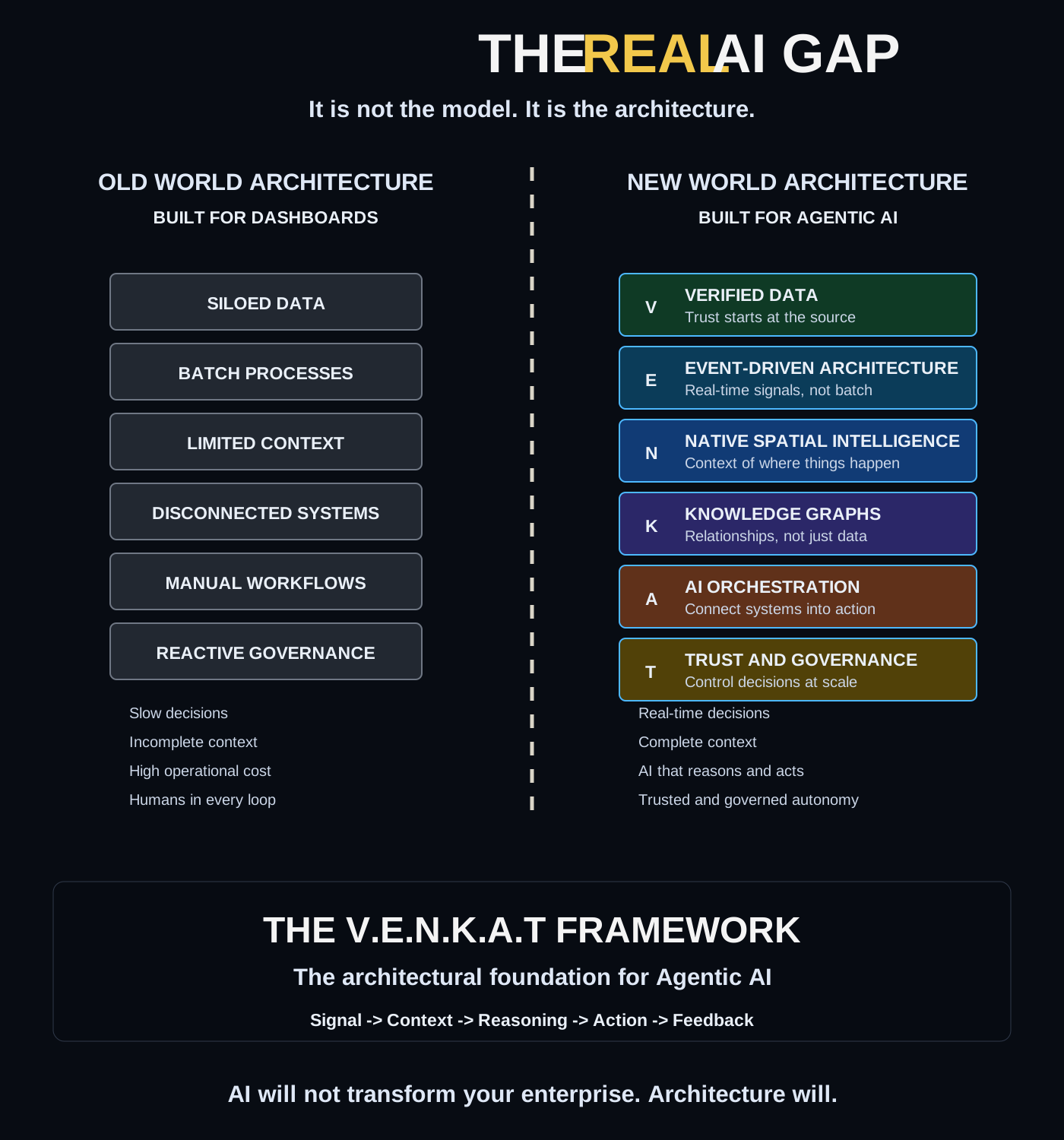
Architecture flow
Enterprise systems & events → context fabric → reasoning & planning → orchestration → tools, humans & actions → feedback
Verified data products, event channels, spatial intelligence, and knowledge graphs converge in a context fabric. Models and agents reason over that bounded context. Orchestration separates planning from execution, routes consequential choices to humans, and records outcomes. Trust and governance apply across every stage.
Core components
| Component | Role |
|---|---|
| Enterprise systems | ERP, CRM, GIS, SCM, IoT, data platforms, and operational applications that supply facts or execute work. |
| Verified Data Layer | Trusted products, contracts, lineage, quality, metadata, observability, and stewardship. |
| Event-Driven Architecture | Streams, topics, event mesh, change-data capture, operational triggers, replay, and recovery. |
| Spatial Intelligence | GIS, routing, proximity, service areas, network constraints, movement, and digital twins. |
| Knowledge Graph Layer | Entities, relationships, ontologies, policies, dependencies, provenance, and temporal context. |
| AI Reasoning & Planning | Models and agents that evaluate goals, constraints, evidence, options, uncertainty, and risks. |
| AI Orchestration | Approved tool calls, workflow execution, API coordination, budgets, human checkpoints, and compensation. |
| Trust & Governance | Identity, access, policy, risk thresholds, approvals, audit, compliance, explanation, and monitoring. |
| Feedback & Outcomes | Results, incidents, exceptions, overrides, user feedback, policy violations, and performance signals. |
Design principles
- Treat AI actions as governed enterprise operations.
- Separate reasoning from tool execution through policy-aware orchestration.
- Make trust, provenance, uncertainty, and policy context machine-readable.
- Use spatial and graph context when decisions depend on routes, proximity, relationships, or dependency chains.
- Provide safe state, human escalation, emergency stop, rollback, and compensation.
- Capture feedback from every material action to improve architecture, controls, and outcomes.
Architecture assurance
Use the Practitioner Suite to define the target maturity, map controls to components, collect operating evidence, and test the architecture before certification.